The Economy Of Data

Understanding and optimizing the foundational inputs that will power Artificial Intelligence in Africa.

Linet is a computer scientist, Certified Data Privacy Solutions Engineer, and practitioner in AI policy, data science and data policy. She works to strengthen data ecosystems in partner countries across Africa and Latin America, as well as strategies to tackle technical challenges and achieve their data for decision and policy making commitments.

  • A few weeks ago, in his keynote to Kenyans, the president of Kenya admitted that building AI data centers in Kenya (as it is in many countries) is a pipe dream. This followed an agreement signed between Microsoft, The Government of Kenya and G42. He admitted that, to build an efficient data center requires about 1,000 megawatts of energy and Kenya, as a country, produces 2,300 MW. Of cause there are different demands for data centers as follows:

    Small / edge site: 10–250 kW total facility power.
    Enterprise / medium: 250 kW – 2 MW.
    Large colocation: 2–10+ MW.
    Hyperscale (Google/Amazon/MS/NVidia-style): 10 MW → 100+ MW (per site).

    As the president admitted, to run one data center in Kenya, the government will have to shut down half the country’s supply in a country that is already implementing load shedding.

    The Kenya AI strategy set out a very ambitious goal for Kenya 2025 – 2030. In the strategy’s budget, infrastructure set up took the cake for the highest cost when it comes to setting up an AI ecosystem in Kenya. The strategy outlines many other building blocks to AI that include data and skills. But who said Kenya must do it all, alone? A few other countries in Africa have developed their AI strategies (Egypt, Rwanda, Mauritius, Senegal, Ghana, Benin, Tunisia) and The AU has also developed a continental AI strategy.

    The major economies that are leaders in AI development have large populations and are also able to rely on other countries for input. None is doing it alone. Think America, China, India and those in the EU. In Africa, countries are pulling into themselves in trying to win the AI race with limited populations (demand), inputs (supply) and negotiating power (in part due to low populations) at the global stage.

    In the recent past, I have come to the conclusion that for Africa to truly develop a robust AI ecosystem, the Africa Union has to take center stage. Instead of each African country trying to do everything – research, chips, data centers, cloud, regulation, and talent – the continent could unlock far more potential by specializing across regions, just like the USA has done.

    In the USA model:

    • California → innovation, startups, research
    • Washington & Oregon → cheap hydropower + data centers
    • Virginia → world’s densest internet exchange + cloud campuses
    • Texas → massive energy supply + chip fabrication growth
    • Washington, D.C. → policy, security, coordination

    No single state tries to be the entire stack. The federated structure lets each region focus on the part they’re naturally strongest at.

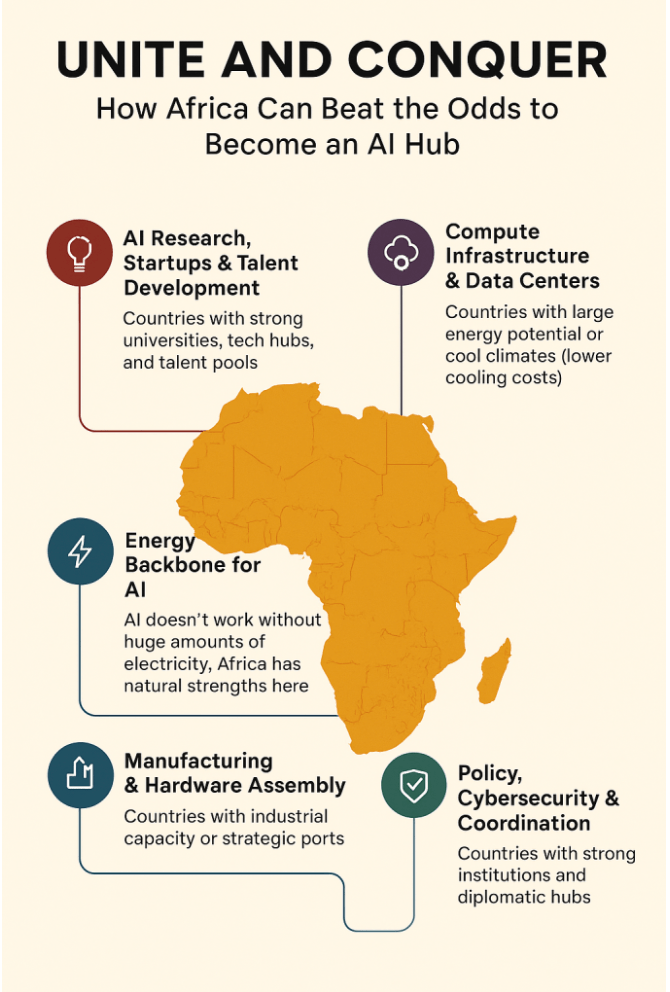
    A Comparable Africa Model for AI

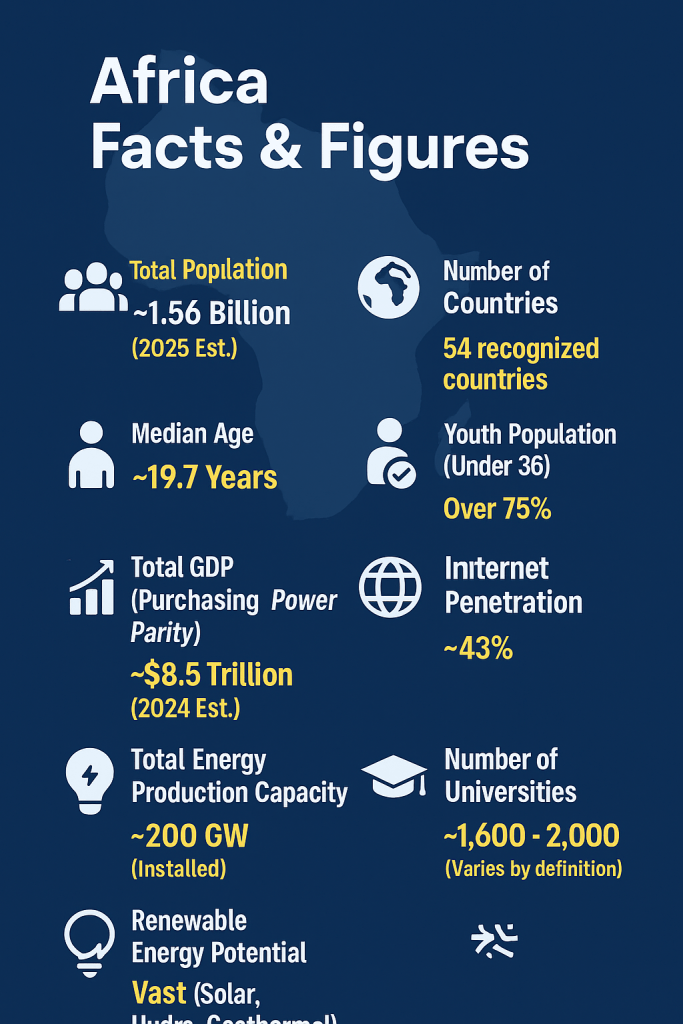
    Africa, with a population of 1.56 billion people, can borrow from this model. The continent could distribute the AI value chain across countries according to natural advantages, energy resources, talent pools, and existing infrastructure.

    1. AI Research, Startups & Talent Development

    Countries with strong universities, tech hubs, and talent pools:

    • Kenya → software development, applied AI, fintech, robotics
    • Nigeria → large talent base, language models for African languages, AI startups
    • South Africa → advanced research, university infrastructure, machine learning labs
    • Egypt → engineering talent, AI for logistics and agriculture

    Goal: Build models, create applications, train researchers, develop language datasets.

    2. Compute Infrastructure & Data Centers

    Countries with large energy potential or cool climates (lower cooling costs):

    • Ethiopia → abundant hydropower for energy-hungry AI clusters
    • DR Congo → huge hydroelectric capacity
    • Morocco → solar + wind → green energy for GPU centers
    • South Africa → existing data center ecosystem + connectivity
    • Namibia → solar power + large land availability

    Goal: Host large training clusters, cloud regions, continent-scale storage, green compute.

    3. Energy Backbone for AI

    AI doesn’t work without huge amounts of electricity. Africa has natural strengths here:

    • Kenya → geothermal power
    • Ethiopia → hydropower
    • Morocco & Egypt → solar and wind
    • Nigeria → natural gas and energy hubs
    • Namibia & Botswana → massive solar corridors

    Goal: Provide competitive, sustainable energy for AI training and data centers.

    4. Manufacturing & Hardware Assembly

    Countries with industrial capacity or strategic ports:

    • Egypt → electronics assembly, chip packaging
    • South Africa → component manufacturing, robotics, telecom hardware
    • Morocco → automotive & electronics export hub → AI devices/edge hardware
    • DR Congo → minerals supply for chip and device manufacturing

    Goal: Produce servers, cooling systems, networking gear, and edge AI devices.

    5. Policy, Cybersecurity & Coordination

    Countries with strong institutions and diplomatic hubs:

    • Rwanda → digital policy leadership
    • Ghana → data governance, regional standards
    • Kenya/Ethiopia → continental internet exchange points
    • African Union (AU) → centralized AI regulation, ethical frameworks

    Goal: Set unified standards so Africa negotiates and competes as a bloc.

    Africa doesn’t need each country to build its own GPUs, energy grid, hyperscale data centers, and AI research labs. It needs a continental division of labor.

    Just like the USA isn’t one state doing everything, Africa could become a powerful AI ecosystem if:

    1. talent clusters form where universities are strong,
    2. data centers go where energy is cheapest and available,
    3. hardware assembly goes where inputs/ports/industry already exist,
    4. and regulation is coordinated across the AU.

    Unity doesn’t mean uniformity, it means coordinated specialization.
    That’s how Africa can compete at scale in the race to AI dominance.
  • A few days ago, speaking to a couple friends, I asked them the cliché thing you ask people who do not speak your native language, ‘how do you say ‘hello’ in your mother-tongue?’. My friends are a little over the youth group age, grew up in a setting where they spoke their native language and are both from the same Kenyan tribe. Shock on me, they couldn’t agree on a common phrase that said ‘hello’ in their mother-tongue. We spent another half hour or so discussing the difference in meaning in the various phrases that were presented; when you can say it, to whom you can say it and how you can say it. As you can imagine, this was all very confusing for me. A native speaker of my mother-tongue, ekegusii.

    A few weeks ago, the swahili greeting phrase “Shikamoo” sparked controversy on social media when the linguists came to correct all of us on its use. You should only use ‘Shikamoo’ when greeting your elders and NOT your peers or those younger than you! How many of us remember the numerous times our school teachers greeted us with ‘Shikamoo wanafunzi’ on swahili Wednesday? As we have come to learn, different languages have gender, age, location, among other nuances that we only learn on the go.

    I grew up in the village, Nyamira, and can speak my mother-tongue very fluently. Both my parents spoke the language at home but my dad, a High School Principal (now retired), preferred that his 8 children communicated in English. As he argued, you will be tested in English and one subject in swahili. You will not be tested in your native language. His house, his rules.

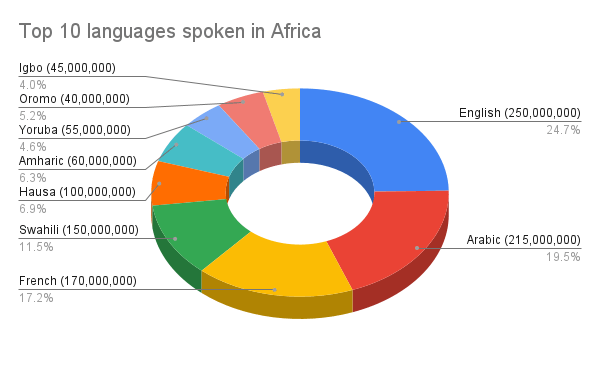
    The world is going through an interesting transformation where natural language processing is the big thing running global economies with large language models dominating their use and need for resources – investments, data centres etc. When I was a student of computer science and studying AI, I always thought NLP was the sleepy sibling in the AI family but lo and behold, the nice ones sometimes finish first! LLMs are powered by algorithms and language data that primarily focuses on the ‘large languages’. The smaller you go, the less representation there is.

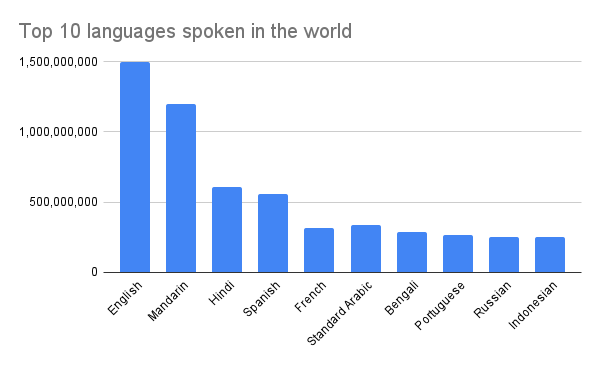
    The thing that is common among the top 10 languages spoken in the world is, the young ones of the native countries speak the language and the school text is also in these languages. We have seen global leaders travel around with interpreters and local athletes power through languages that are foreign to them.

    I have two children, born and growing up in a city setting. My husband and I do not speak the same native language so naturally our mode of communication is English. Our Kids speak English and one speaks some French as it is offered in school. They both know when Mama is angry because I go back to the basics, ekegusii. But, if we are raising children who cannot speak our native languages, what is the business case for the investment that is going into the various initiatives for localization of AI into African languages?

    Source: funmioyatogun.com

    There are over 2,000 languages spoken in Africa and my native language – ekegusii – has approximately 2.7 million speakers according to the 2019 KNBS census.

    So, what is this post about?

    There are multiple initiatives that are doing a lot of good work in documenting and producing data on various African languages. Some of these include Masakhane and KenCorpus. Beyond the archival function of these initiatives, there is a need to scale them to bring on more users that will carry this initiatives forward and make a case for more investment and effort towards mainstreaming local languages. Schools and homes present this opportunity.

    Languages carry traditions, culture and community. In the subtle changes in dialect or ascents. In the bold presentation of heaviness of the tongue or clicking of the sounds lies a great opportunity to pass this on to our children and the future generation. The erasure of language means the erasure of communities and their histories. For Africa to be adequately represented in the AI and data space, the efforts need to go beyond our gender, race and age. It needs to go into our languages and the more people who can speak these languages, the more they cannot be ignored.

    Mbuya mono!

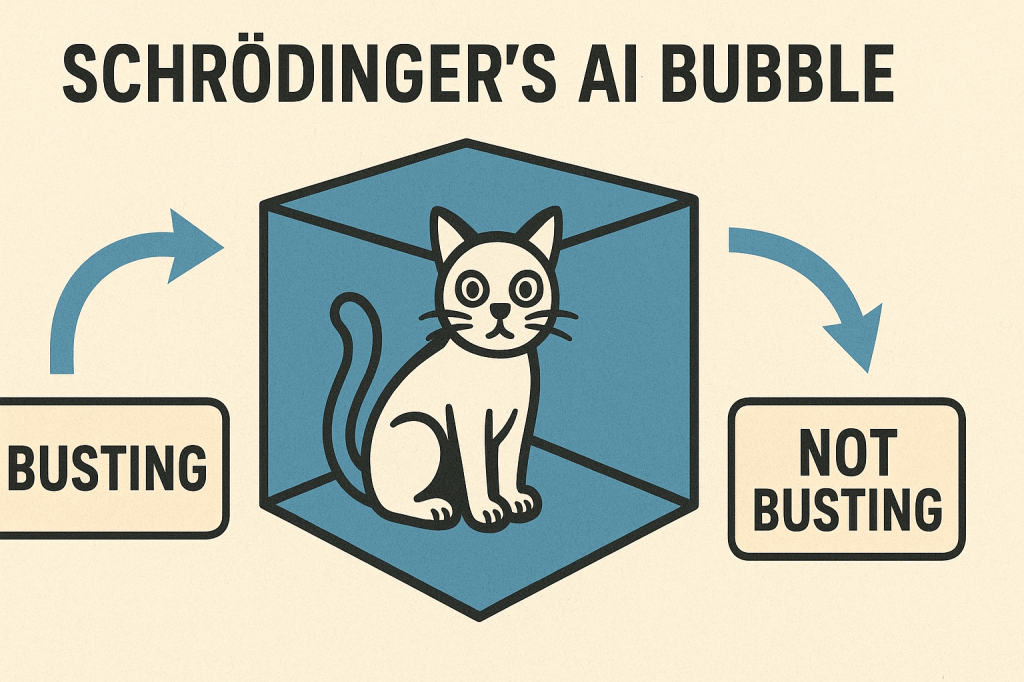
  • In quantum mechanics, the thought experiment of Schrödinger’s cat illustrates a system trapped in superposition: alive and dead until the box is opened and observed. The current AI investment craze may be exhibiting a similar paradox: is the bubble bursting, or is it still fully alive?

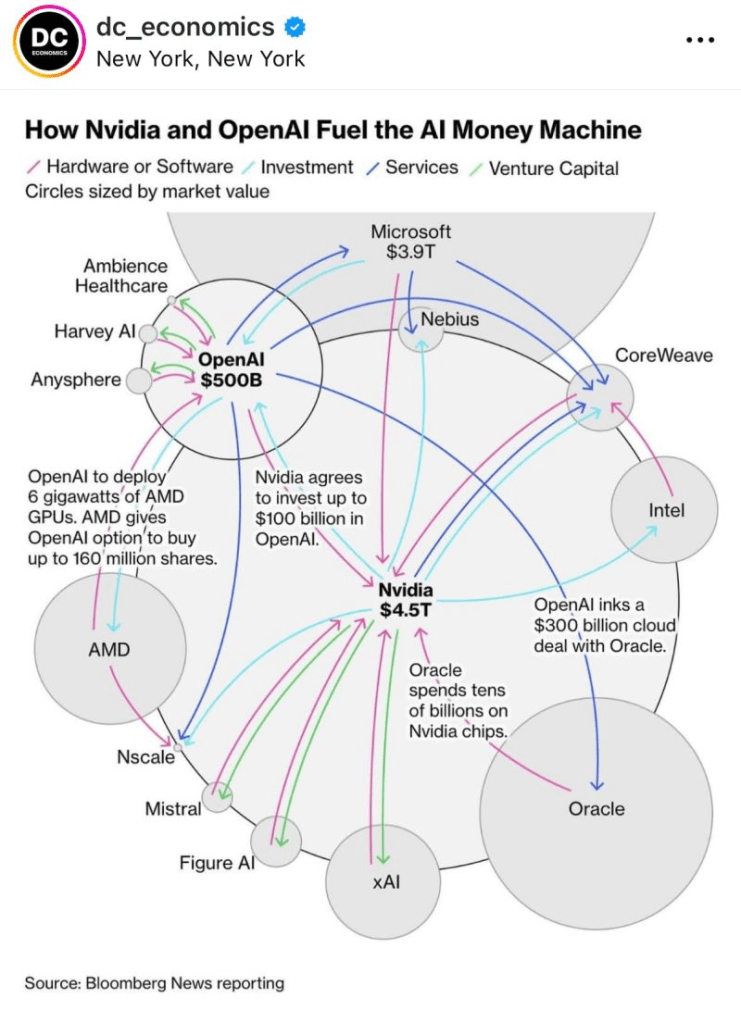
    Not too long ago, we started witnessing the cyclic investment pattern of the big AI giants led by OpenAI and this prompted most analysts to question what could actually go wrong with this web of intertwined investment model.

    On one hand, the case for a bursting bubble is built on the hallmarks of speculation with massive capital flows into AI infrastructure, soaring valuations for startups, and business models whose earnings are still uncertain and unknown. Some analysts warn that we are right on the edge of a correction. On the other hand, the chair of the Federal Reserve, Jerome Powell, has argued that this is not the dot-com bubble of the 1990s and that while he will not name any companies in particular, the companies have earnings and are not speculative. Similar arguments have been made, taking into consideration the fact that there is real money being invested in the AI economy. Some have indicated that even if the bubble was to burst, it leaves behind a trail of good (skills, infrastructure developed, industries created etc) and not all destruction; so maybe if it does bust, the risk was worth it?

    Thus, the AI bubble exists in two states simultaneously, like the cat in the box, until one of the two realities is observed. Will the market “open the box” and collapse, or will the wave function resolve in favour of sustained growth? The answer matters for governments, investors and African economies alike.

    For policymakers and practitioners in Africa, the key is to recognise this duality that demands that we treat AI investments as high risk but also high opportunity. Build safeguards such as measurable KPIs, realistic returns, and portfolio diversification while also positioning for the upside if the technology delivers its promise. The lesson here being – don’t bet everything, but don’t ignore the box either.

  • This post is co-authored by Linet Kwamboka Nyang’au and Ambassador Prof. Bitange Ndemo (Kenya’s Ambassador to the European Union) in celebration of World Statistics Day 2025.

    The worth of a nation is determined by how much reliable and precise statistics it can generate. Governments access reliable and precise statistics to help them decide how to allocate resources and formulate policies. They serve measuring progress and accountability. Internationally, countries use reliable and precise statistics, to track and assess their level of achievement on national development goals. Unfortunately, many countries, especially in Africa, are witnessing the collapse of trust in the National Statistics Offices. Invalid and unreliable policies, lack of evidence-based policymaking, and eroded institutions that are supposed to provide the facts about the economy and society of a nation.

    Distrust has many roots. One central cause is the impression that statistics can be politically manipulated. When someone in power is accused of either “cooking the books” or hiding information that shows the worst possible outcomes, the whole system loses credibility. Trust in the numbers reported is lost, and domestic and foreign observers start assuming that the “official” statistics are fabricated. When citizens believe that figures are politically manipulated, rather than politically neutral, trust erodes even further. In many cases, the wrong kind of political influence is not even the main problem. Many national statistical systems simply do not have the needed guidance, budgets, and human resources. Many NSOs do not have the capacity for completing basic tasks, such as regular censuses, reaching and accurately enumerating remote areas, or repeatedly refining and training enumerators. This, of course, results in incomplete, outdated, or simply wrong data, which reinforces the skepticism.

    Adding to these challenges is the lack of transparency. From the collection of the data to the statistics produced, it is a complex process. However, when the methodologies remain hidden, the data becomes a black box, difficult to interpret, and easy to dismiss. When figures are constructed without adequate explanation, the lack of clarity and communication allows conspiracy and suspicion to fester. The age of the legal frameworks does little to help the situation and reinforces the fragility of these institutions and of the NSOs, as the laws that govern these frameworks lack the independence, the data protection, or the legal sufficiency to defend against legal challenges. For these reasons, the data that is provided by NSOs remains untrusted. The data provided by international organizations, international think tanks, and private data companies becomes more trusted.

    Restoring confidence in national data systems will take time and focus on institutional reform, political will, and public involvement. The first action is to protect the independence of NSOs. Governments prove their dedication to impartiality by shielding them from political interference and securing independence through robust legal frameworks. Leadership appointment laws and frameworks governing release timelines and data budgets must guarantee autonomy. International frameworks, like the UN’s Fundamental Principles of Official Statistics, provide actionable steps toward securing legal independence and demonstrate to citizens and partners that objectivity is a sovereign goal.

    Equally vital is the investment in capacity and modern technology to improve NSO data elasticity. Without predictable and sustainable funding, NSOs will also struggle to meet the pace of data production. The use of digital tools like mobile data collection and administrative records improve accuracy and timeliness. Meanwhile, advanced training in data analysis and communication enables the production of actionable insights instead of mere statistics. Collaborations with universities and the private sector will help NSOs close knowledge gaps and accelerate the goal by facilitating innovative approaches.

    Restoring trust requires transparency. Accountability goes beyond merely publishing statistics. National statistical offices (NSOs) need to make their methodologies, and sources data open and accessible along with the limitations of their actions. Credibility can be garnered through open data policies, which provide researchers and civil society with access to anonymized raw data. When citizens and public organizations obtain statistics and validate them, suspicion shifts to informed engagement. 

    NSOs have primarily depended on extensive technical reports as their means of communication, which the general public cannot understand. Data production and the communication of findings to the public require the use of modern dashboards, infographics, and interactive visualizations. Data needs to be produced to be used, and NSOs can produce data that informs citizens, journalists, and civil society organizations. Citizens understand the value of the NSO system and the statistics produced when they can see their data used in the planning of schools, clinics, and infrastructure.

    Strengthening national data systems is possible through support on a regional and international level. When countries exchange best practices and standardize procedures, it simplifies cross-border comparison of progress. For effective and lasting statistical capacity building, development partners and regional organizations must coordinate technical support and sustained investments. Moreover, countries that work together statistically instill greater confidence through a form of peer accountability as collaboration encourages countries to maintain standards of integrity and quality in their statistical systems. 

    Improving institutions and technical aspects may be necessary, but National Statistical Offices cannot restore trust alone. Public confidence follows political leaders. When a head of state cites figures from the national statistics office, it signals trust in the institution and a commitment to policy that is evidence-based. Ignoring national figures in favour of external statistics communicates the opposite and undermines the system that should inform policy. Leaders must support NSOs financially but must also defend their independence politically, even when they release politically sensitive data. By consuming official statistics regularly, politicians create demand and encourage NSOs to produce and release quality data more promptly.

    Citizens have a unique role as both a resource and a recipient for valuable information. Engaging openly with censuses and surveys leads to improved data quality, and when citizens realize that valuable data results in improved services, they are more likely to engage. Civil society and the press also bear the responsibility to question both the state and NSOs, scrutinizing the justification offered for data and asking why gaps exist. Advocating for and fostering a culture of data literacy in schools, in communities, and in the public sphere is crucial to empowering citizens to constructively engage with data, rather than dismissing it or becoming a target for disinformation.

    These combined efforts result in a virtuous cycle. Politicians use and defend data provided by NSOs and citizens appreciate and engage in the data collection process, resulting in active public participation. Over time, self-confidence increases, producing a data culture that promotes informed decision-making, increased accountability, and progress.

    Finally, restoring faith in a country’s data systems goes beyond the analytics and the methodologies. It is about an understanding, a social contract, and a civility agreement where the information is a common good, not a political tool. When data is trustable and available, it strengthens governance, improves accountability, and allows people to gauge their progress. In doing so, it provides a robust underpinning to the overall development and prosperity of a nation.

  • A couple of weeks ago, I put out a survey on my socials titled ‘AI in Everyday Work & Life: Insights for Policy and Innovation.’ The idea behind this survey was to start to understand how different people are using AI and the new and emerging models in their day to day life, and if there is anything from this that policy makers could learn from in the development of data policies that should adequately meet the needs of AI developers and users.

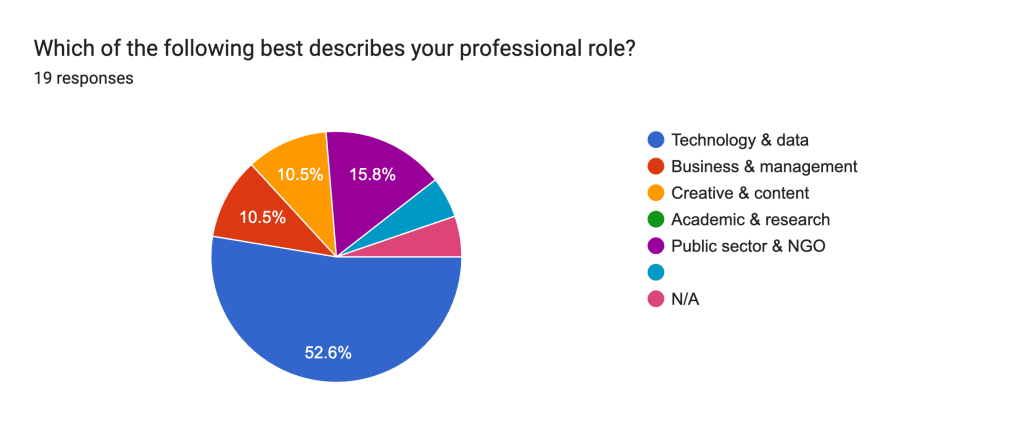
    For this survey that is still available here, I received 19 responses (n=19) and below is a summary analysis of the findings.

    The responses received were from 4 countries: Kenya (16), Uganda (1), Ghana. (1) and Malawi (1)

    The Key findings at a glance:

    52.6% of those surveyed worked in technology and data, giving us a good understanding of the technical capacity of those involved in AI.

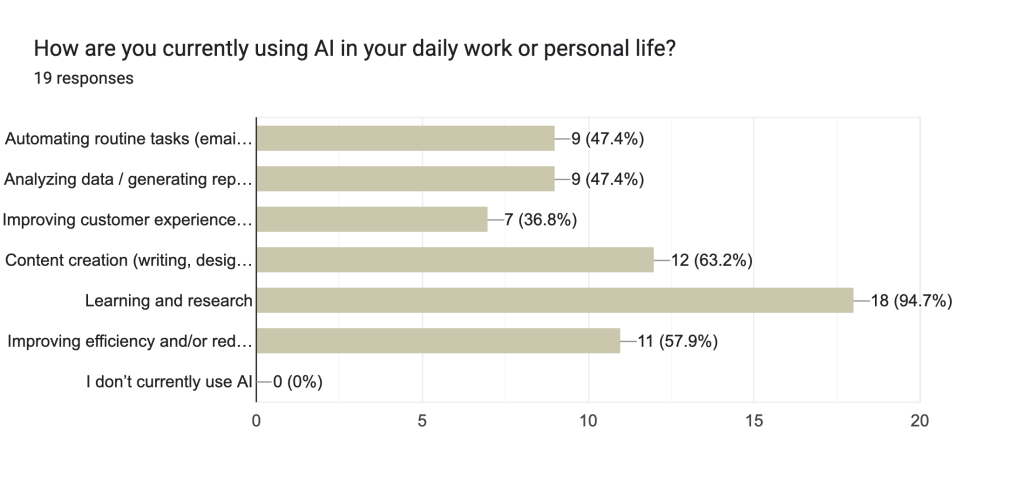
    On the question on how the respondents are using AI in their daily work, learning and research had the highest use.

    63.2% of the respondents reported significant improvement in their productivity, creativity and decision making and only 5.3% reported not having seen any change with their use of AI tools which might explain why one respondent indicated that, “Many people give LLMs bad prompts, which betrays their ignorance of the limitations of these tools.”

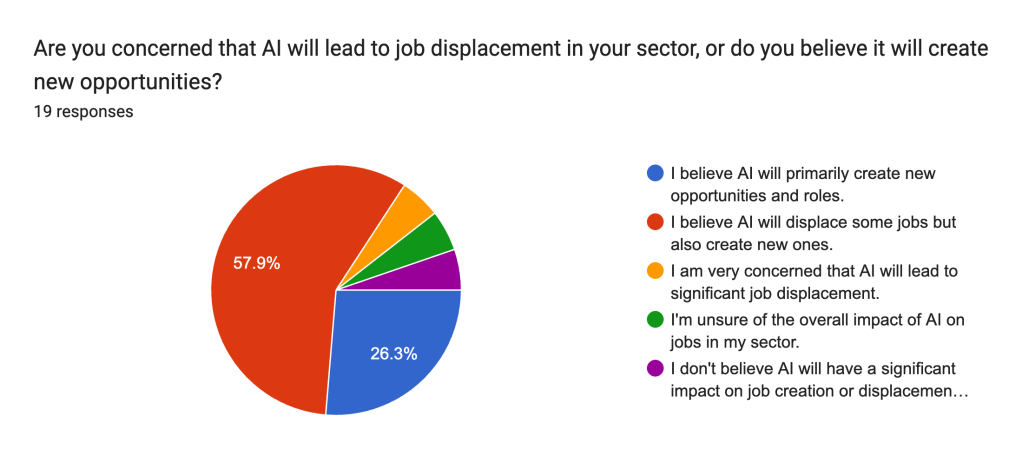
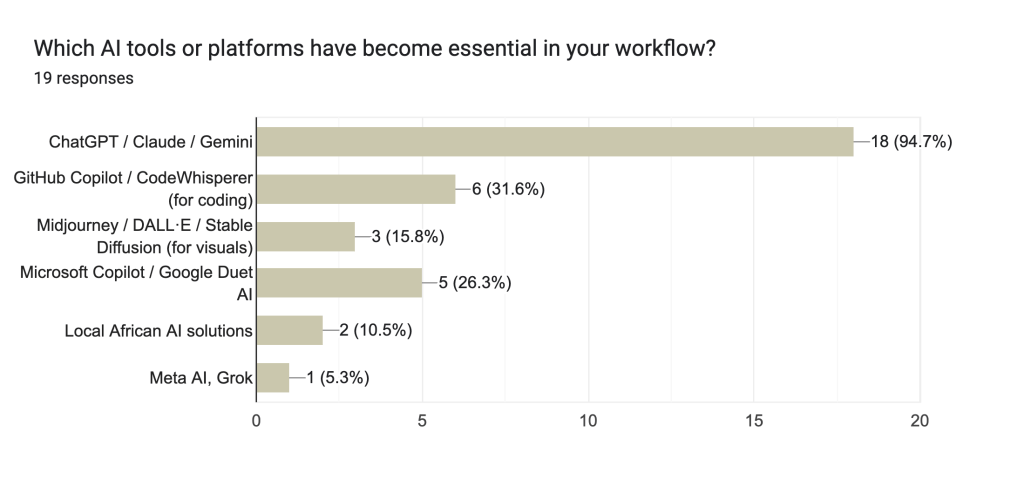
    The AI tools that were most popular were the popular GPTs. 57.9% of the respondents believe that while AI will most definitely displace some jobs in their industry, it will also create opportunities for new jobs.

    While most respondents were not aware of any locally/Africa developed AI solutions, it is encouraging to see that others are already using Africa built solutions like sanifu.ai and DPE Interch platform; and that another group is exploring solutions out there. One respondent indicated that, “Africa should come up with more AI innovations to avoid being left out of AI disruptions.

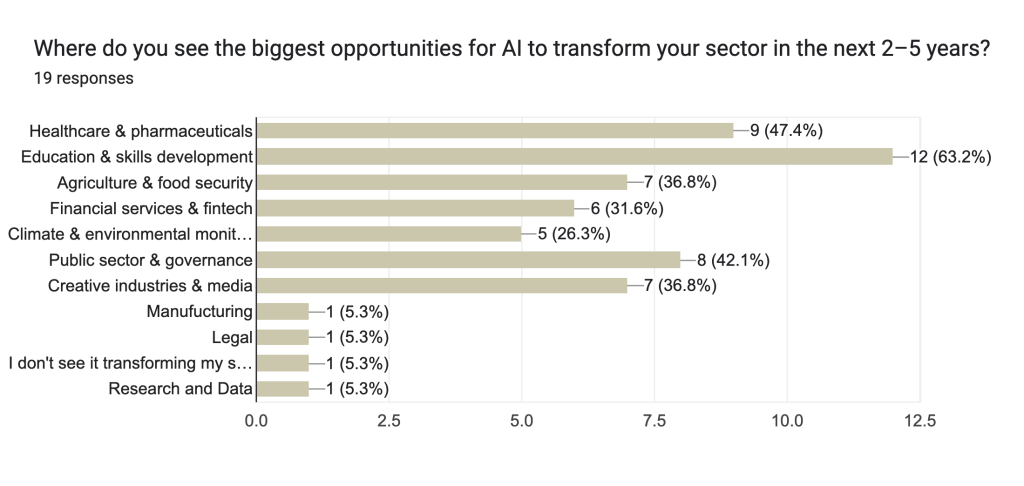
    Education and skills development presents the highest opportunity for AI transformation according to the respondents with Healthcare and Pharmaceuticals coming in second. I wonder if this is a sign of where the highest disruptions will be seen…

    Access to local datasets remains a big challenge and opportunity towards the actualization of the AI dream.

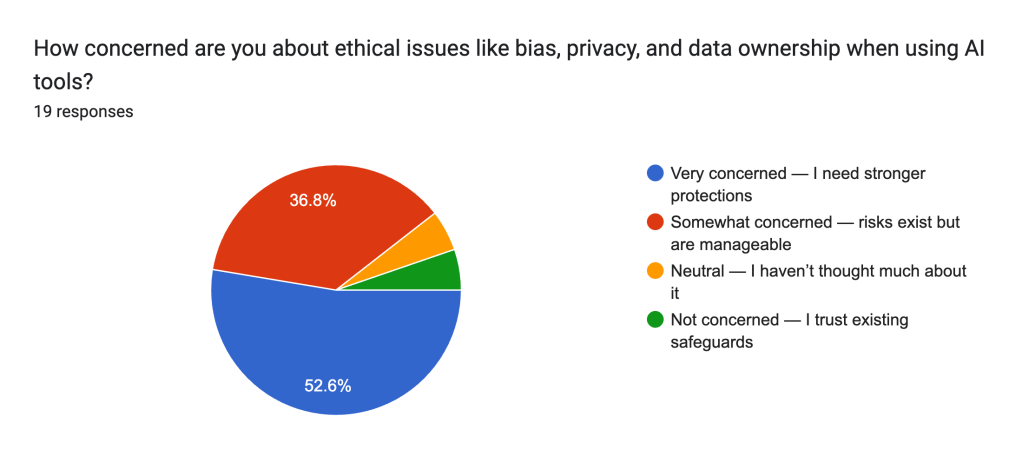
    Just as the lack of clear regulations and policies is also a big concern for AI practitioners, this gap presents a great concern on the ethical element with most requiring stronger protections. Most of the respondents also prefer a hybrid model of governance that incorporates both global principles and local context implementation, with one of the respondents indicating hope that AI safety will be a priority in the development phases of these technologies.

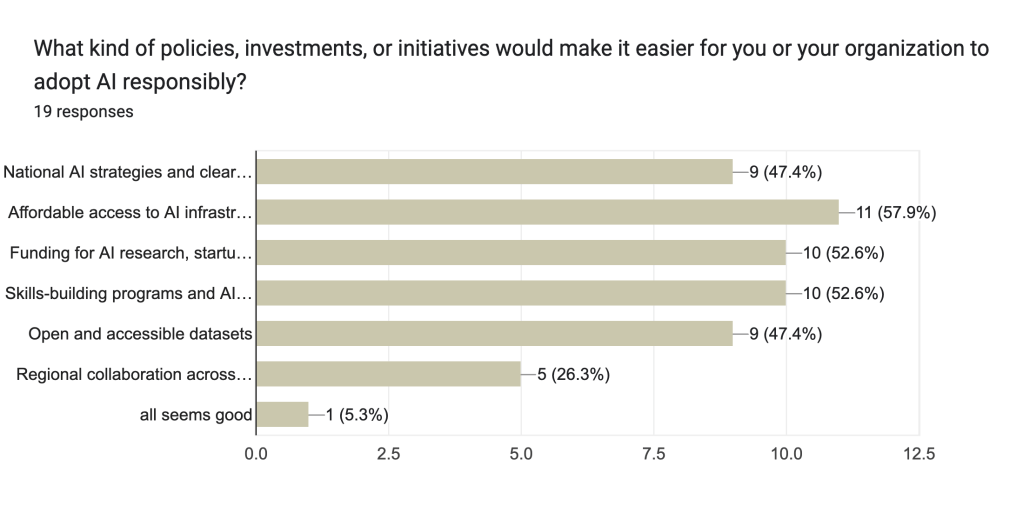
    It is not new that infrastructure that drives AI is quite expensive. We have seen mind boggling figures in the news on how much some companies spend on hosting costs and this is where the true barrier is on the actualization of Africa developed AI solutions. Investments and deliberate initiatives towards cheaper solutions e.g edge computing would be a game changer in the sector.

    Nothing could conclude this post better than this comment that came in from one respondent, “AI is a tool, how it is used depends on the organisation. It can lead to management better understanding job design and organisation to optimise cohesion and productivity with it coupled with training and continuous upskilling of staff or it can lead to the contempt of subordinates by their managers to undermine what they do as replaceable and heighten unethical treatment of staff.”

  • Around the world, AI is no longer a futuristic concept but a present-day reality transforming industries and societies. For Africa, embracing AI is a critical step towards economic growth, innovation, and solving unique challenges. However, the path to AI maturity is not linear. It’s a journey best understood as a pyramid of readiness, where each level builds on the one below in a process of incremental growth. 

    Level 1: AI Exploration

    The foundation of AI readiness is AI exploration. At this stage, organizations and countries are in the discovery phase. This is about building awareness of AI’s potential and its relevance to local contexts. The primary focus is on understanding what AI is, its various applications (such as in agriculture, healthcare, and finance), and the different tools available. Success at this level requires basic digital literacy and access to foundational knowledge resources. It involves conducting feasibility studies, organizing workshops, and fostering a culture of curiosity around technology. Without this broad-based exploration, the rest of the pyramid cannot be built.

    Level 2: AI Advocacy

    Once a basic understanding is in place, the next level is AI advocacy. This stage is about generating buy-in and championing the adoption of AI at a broader level. It’s a crucial step in moving from theoretical interest to practical application. This involves influencing policymakers, business leaders, and communities to support AI initiatives in a top down approach. Successful advocacy requires communicating the tangible benefits of AI, showcasing pilot projects, and addressing concerns about job displacement, resource constraints and data privacy. Key requirements for success at this level include strong leadership from both the public and private sectors, a collaborative ecosystem of startups and academia, and dedicated efforts to build public trust in AI.

    Level 3: AI Research and Development

    With advocacy comes the need for a deeper, more specialized level of engagement: AI research and development (R&D). This is where the core work of building AI capabilities begins. It moves beyond general awareness to a more scientific and engineering-focused approach. This level involves investing in local talent, funding research centers, and encouraging the development of AI models tailored to African datasets and challenges. Success hinges on robust investment in research infrastructure, data collection and labeling, and fostering a strong academic-industrial partnership. It’s about creating an environment where researchers and engineers can innovate and solve problems specific to the continent, such as using AI for crop disease detection or improving logistics in remote areas.

    Level 4: Product/Model Development

    Building on the R&D foundation, the fourth level is product/model development. This is the stage where research is translated into tangible, market-ready AI products and services. Organizations and startups leverage the research and talent pool to create solutions that can be commercialized. This requires moving from proof-of-concept (PoC) projects to developing minimum viable products (MVPs) that address a specific user need. Success at this level depends on access to a thriving startup ecosystem, relevant skills, venture capital, and a clear understanding of the target market. It’s about creating value and demonstrating the commercial viability of AI-driven solutions.

    Level 5: Scaling 

    The pinnacle of AI readiness is scaling. This is where successful products and models are deployed widely to achieve a significant, continent-wide impact. Scaling is not just about growing a business; it’s about making a societal difference. It involves expanding market reach, securing large-scale funding, and building robust distribution channels. Successfully reaching this level requires a strong regulatory environment, access to reliable and affordable infrastructure (like cloud computing, power supply and high-speed internet), and a mature talent pipeline to manage and maintain the deployed solutions.

    The Cross-Cutting Requirements

    Throughout this journey, two cross-cutting elements are essential for success:

    • AI Governance and Ethical Integration: This runs through every level of the pyramid. From the initial stages of exploration to the final stage of scaling, it’s crucial to consider the ethical implications of AI. This includes developing policies for data privacy, ensuring algorithmic fairness, and building systems that are transparent and accountable. Ignoring this element can lead to public mistrust and hinder progress.
    • Early Adopters and Increased Need for Policy, Talent, and Infrastructure: As countries move up the pyramid, the demands for foundational elements increase. Early adopters create a pull for more advanced policy frameworks, a larger talent pool, and more robust digital infrastructure. This feedback loop accelerates the journey towards AI maturity, making it faster and more impactful.

    Africa’s AI journey is a pyramid-building exercise. By focusing on each level – from exploration to scaling – while consistently integrating governance and building capacity, the continent can unlock the full potential of AI to drive a new era of prosperity and innovation in the fourth industrial revolution.

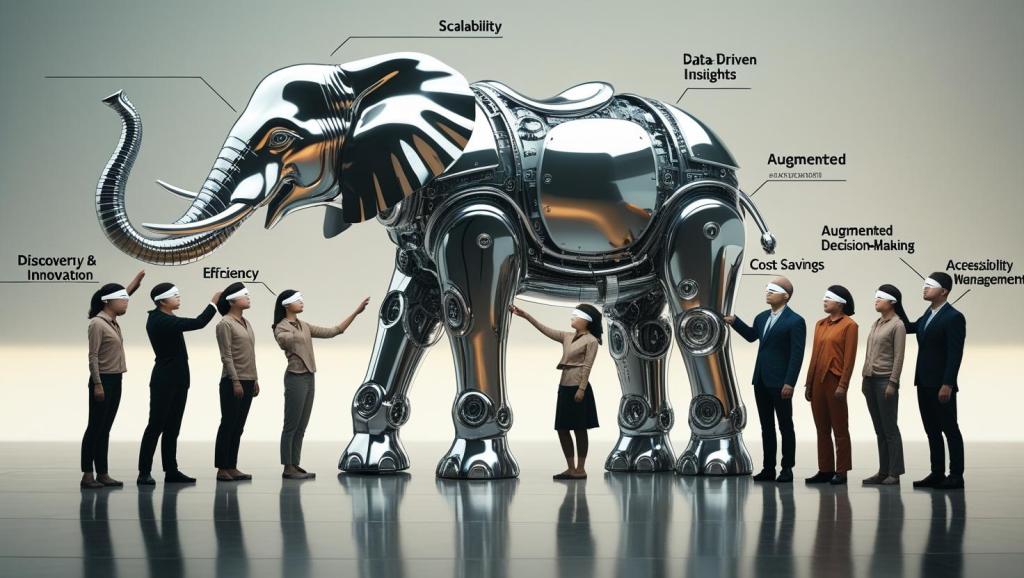
  • In the timeless parable of the blind men and the elephant, each man touches a different part of the creature; a tusk, a tail, a leg and comes to a wildly different conclusion about what he’s experiencing and what an elephant is to them. One insists it is a spear, another a rope, another a pillar. None is entirely wrong, but none sees the full reality.

    This parable has never been more relevant than it is today, especially when we talk about Artificial Intelligence in Africa. Like the elephant, AI is vast, complex, and multi-sided. Each of the different players and actors: policymakers, entrepreneurs, workers, educators etc grasps a different part of its potential. In Africa, our vantage points vary even more due to historical inequities, infrastructure gaps, and the promise of leapfrogging old systems which, in many cases, fail to be.

    The image above represents the stakeholders in the AI ecosystem in Africa where each player is exploring the value that AI can bring into their work. Automation, Efficiency, Cost Savings, Data-Driven Insights, Personalization, Scalability, Risk Management, Discovery & Innovation, Augmented Decision-Making, and Accessibility & Inclusion. Each represents an opportunity and a caution.

    Below, we explore these different elements, their pros and cons, and what they mean for our societies:

    1. Automation

    Pros: Replaces repetitive, dangerous, or low-skill tasks. For African agriculture, AI can automate irrigation, pest detection, and yield forecasts.
    Cons: Job disruption is real! Many workers lack safety nets if machines replace them. Not a new concept, but very disruptive at scale beyond manufacturing.
    The Inevitable: Automation is accelerating. But so is the need to reskill.
    The Unseen: Over-automation can erode human judgment and local experience and knowledge.
    The Obvious: Productivity gains can be huge if paired with social protections.

    2. Efficiency

    Pros: AI optimizes workflows, cuts waste, and speeds up processes like in clearing and forwarding.  

    Cons: Efficiency can become a false dependency if it overrides equity and care.
    The Inevitable: Industry and governments will adopt AI to save time and resources while ensuring efficient output.
    The Unseen: Efficiency can centralize power in the hands of data-rich actors.
    The Obvious: Done well, it can free up funds for critical services.

    3. Cost Savings

    Pros: Automation, predictive maintenance, and smart resource allocation reduce costs. This is vital where budgets are tight.
    Cons: Short-term savings can mask long-term social costs, like unemployment and job displacement.
    The Inevitable: Organizations will be pressured to adopt AI to remain relevant and competitive.
    The Unseen: Savings might be captured by global vendors rather than local communities.
    The Obvious: AI can help stretch limited public resources further.

    4. Data-Driven Insights

    Pros: AI can surface patterns in health, climate, or education data that were previously invisible.
    Cons: Biased/incomplete data leads to biased/misleading insights, worsening inequality.
    The Inevitable: More decisions will be shaped by AI analytics.
    The Unseen: Data privacy risks are often ignored in pursuit of insights.
    The Obvious: High-quality data is essential to AI’s success.

    5. Personalization

    Pros: AI tailors services like educational content or health messages to individuals.
    Cons: It can reinforce stereotypes or manipulate users without consent.
    The Inevitable: Personalization will become a norm in digital services e.g personal digital assistants
    The Unseen: Cultural nuance can be lost if systems are built elsewhere and only consumed locally.
    The Obvious: Personalization can improve engagement and outcomes.

    6. Scalability

    Pros: AI solutions can scale across countries without needing massive new infrastructure setups
    Cons: Scaling too fast can leave ecosystems and communities behind or amplify harm.
    The Inevitable: Africa’s youthful population will drive demand for scalable solutions.
    The Unseen: Local SMEs may struggle to compete with big platforms especially by investment required to compete.
    The Obvious: Scalability is critical to meet large-scale challenges.

    7. Risk Management

    Pros: AI detects fraud, predicts crop failures, and anticipates disease outbreaks.
    Cons: Over-reliance on AI systems can reduce human vigilance and create blind spots.
    The Inevitable: Governments and insurers will embrace AI to reduce exposure.
    The Unseen: Who bears liability when AI gets it wrong?
    The Obvious: Risk management improves resilience.

    8. Discovery & Innovation

    Pros: AI accelerates breakthroughs—from drug discovery to renewable energy modeling.
    Cons: Innovation hubs and labs often sit far from where solutions are most needed.
    The Inevitable: African countries will race to build AI R&D capacity.
    The Unseen: Innovation can deepen dependency on foreign intellectual property which can hurt supply down the line with protectionist policies.
    The Obvious: New solutions are urgently needed for Africa’s common challenges.

    9. Augmented Decision-Making

    Pros: AI helps leaders make more informed, data-driven decisions and policies.
    Cons: Decisions can become opaque if people defer too much to algorithms and reduce consultations.
    The Inevitable: AI will increasingly shape policy and business strategy.
    The Unseen: Citizens may lose trust if they don’t understand how decisions are made.
    The Obvious: Augmentation done right can support better governance.

    10. Accessibility & Inclusion

    Pros: AI can translate languages, generate captions, and adapt interfaces to different abilities.
    Cons: Accessibility features are often an afterthought, not designed in from the start.
    The Inevitable: Demand for inclusive technology will rise as connectivity spreads.
    The Unseen: Algorithms can exclude marginalized groups if data doesn’t represent them.
    The Obvious: Inclusion is essential for equitable development.

    Seeing the Whole Elephant Yet?

    The story of the blind men reminds us that no single perspective is complete and demand for AI is unique for different circumstances. To build AI ecosystems in Africa that truly serve people, we must:

    • Invest in education and reskilling – policies, capacity, skills, R&D
    • Invest in data ecosystems that ensure complete datasets that are also inclusive.
    • Create policies that protect workers while encouraging innovation.
    • Strengthen local AI development to avoid global dependency.
    • Keep equity, transparency, and human dignity at the core.

    AI is inevitable but how we shape it determines who it benefits, who it excludes, and who it empowers. This is all up to us. Let’s take off the blindfolds and see the whole elephant, together.

  • Data continues to be one of the most underrated things when it comes to the conversation about life as we know it today. In the era of emerging technologies, beyond the infrastructure, capacity, investments, algorithms etc, data remains king, it drives everything.

    On the African continent, the data conversation has seen its fair share of ups and downs. From Open Data Initiatives to Data Centres to Data Champions and back to slow growth. The conversations started high with major investments from major development partners like FCDO, World Bank, GIZ etc. These investments and some of the activism went into passing some major governing laws like data protection laws and access to information laws while establishing major governing offices like those of the data protection commissioners.

    African countries with Access to Information LawsAfrican countries with Data Protection Laws

    As some would argue, the presence of or lack of laws should not be a deterrent to data innovation. While the laws are very important in governing on data use, access, sharing, ownership etc, a vast majority of African countries do not have these governing laws but that should not be a reason for their exclusion from the data economy.

    All these efforts have not gone to waste, lots of good has come out of it but there is still a long way to go. Since the introduction of open data initiatives in the early to mid 2010s, the culture of data has most certainly changed in African countries. From the hype of data being the new oil to actual skills development, investments in data and data systems, development of sustainable data products and the widespread conferencing and workshops to spur the conversations.

    So, where do we go wrong? Why is Africa still facing significant challenges in the conversation on data being a major contributor that will catapult Africa into the 4th industrial revolution? The innovation of data products and the contribution to the data economy beyond convenings remains a challenge and some of the issues that must be addressed in order to overcome these challenges include:

    1. Ownership – African countries need to own their data initiatives. While these can be funded externally, they need to hold the ownership of the solution and their sustainability beyond funding.
    2. Investments – To ensure sustainability, governments must make deliberate efforts into the growth of their data ecosystems and those look like supporting their data systems, innovators and infrastructure.
    3. Hype –  Africa must live and exist beyond the hype. There has been a lot of hype around different concepts especially in innovation and Africa has been left holding the stick of the conversation and convenings ground. Beyond this introduction, African countries need to make deliberate efforts towards prototyping, building and resourcing ideas.
    4. Sustainability – We cannot escape the conversation on sustainability of initiatives.This has unfortunately become very rampant in both the private and public sectors. What happens after the colorful confetti settles on the ground? What happens after donor/funder money runs out? How do we keep things running and growing into the future?
    5. Skills and Capacity – Most African economies lack the right skills and capacity to wrangle data and draw insights. Even when this is done, the insights rarely make it to the tables of decision making and policy formulation.

    It is time African countries of good will got together and decided on a common approach on how to tackle the challenges, address the fears and find our way into the seats at the table of the 4th industrial revolution. We can do it!

  • The Kenya Open Data Initiative is a program that was launched in 2011 out of the need for Government to provide useful information to the public. Its launch followed the promulgation of the Kenya Constitution in 2010, in which Article 35 of the Bill of rights clauses states that every Kenyan citizen has a right to access information held by the state; giving impetus to the government’s willingness to be open and transparent.

    Data is the Foundation of improving accountability and governance and Open Data is in its very definition an opportunity for a government or corporate body to proactively release information to the public and state the facts upfront, giving opportunities for transparency and accountability. To be able to do this successfully, agencies need to review the flow of data throughout their institutions and consider everything about how the data is collected, stored and later on disseminated to the public.

    Increased demand for data means that more and more government agencies make some kind of data and information available online through their websites or dedicated data access portals like the Kenya Open Data Portal. As they do so particularly in electronic formats and more particularly in open formats it makes it possible to easily engage citizens, interact and enhance participation and accountability of government activities. It also means that agencies need to require better quality data not just for the public but more importantly for their own internal operations and to improve the quality and relevance of their finding.

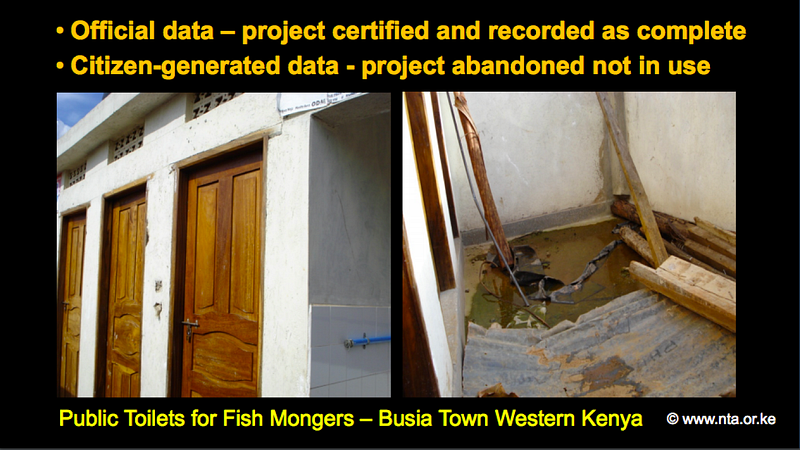
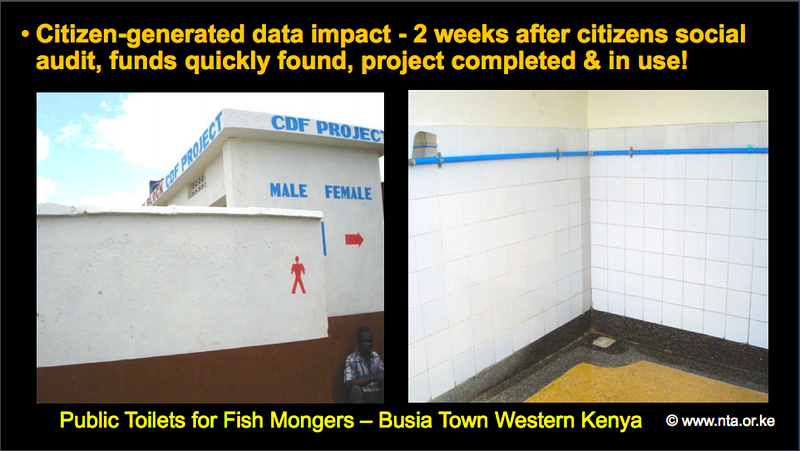
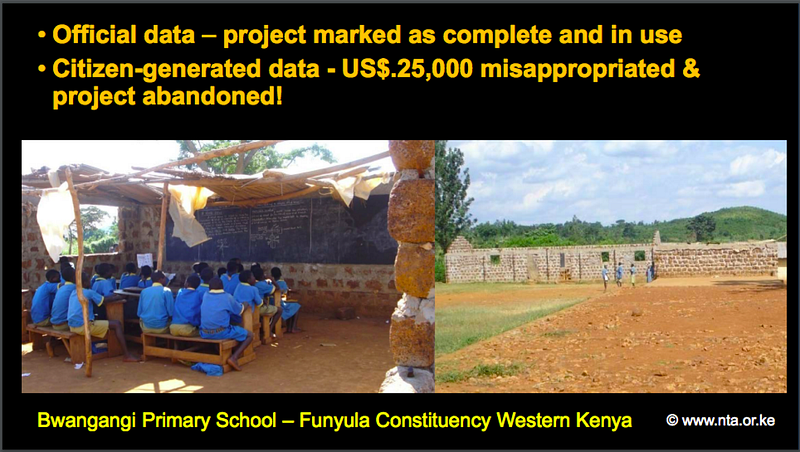
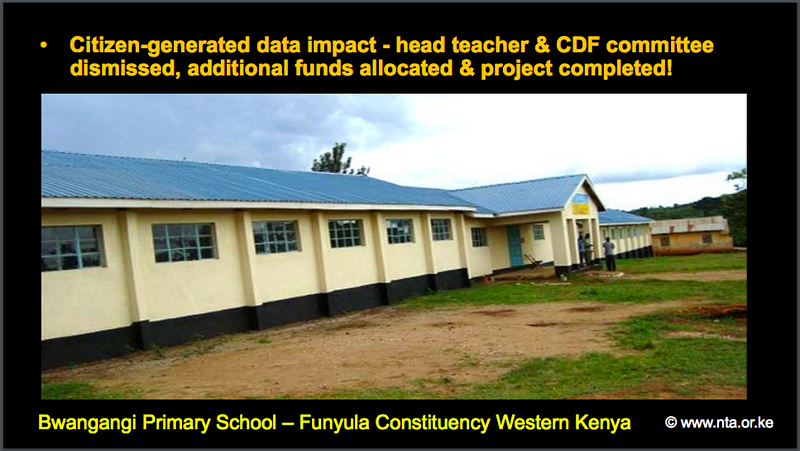
    Citizen and Society participation and involvement in discussions around open data are critical towards valuing government data in its correctness and value. It provides a feedback mechanism for citizens to interrogate government and hold a fact-based discussion with government and elected leaders. Locally we have seen it increase accountability of public officers involved in the implementation of government projects. Where in the past funds could be allocated projects that do not exist on the ground or that are never completed as reported, today citizens can counter check these allocations and through citizen-generated data show photographic evidence of projects, the quality, and level of completion. For Kenya, this is a step in the right direction towards building a “participatory environment with feedback loops that enable citizens to analyze, visualize, and even challenge the reporting in government data.” The question is, “Is the right kind of data that can be a real deterrent towards corrupt practices being published?”

    Case study 1:

    Corruption in and of itself takes place at a transactional level, where assets are transferred from one entity to another. In obvious forms, it can be observed in form of unreasonable pricing of goods and services too far above the bounds of market rates, or in the awarding of contracts to specific entities under unclear circumstances. By its very nature, “corruption likes secrecy, It is a multilayer phenomenon.”One clear way to combat it is by providing greater access to transactional information and further reveal the entities involved in transactions while allowing the public and skilled individuals to examine this Government data and identify potential risks, irregularities or conflicts of interests that take place. In the context of anti-corruption, the open data charterlists a number of basic datasets that should be published by every government. This includes, 1) Data on Government Officials, their actions and or decisions in while in office, financial assets / interests, and records of officials involved in public procurements. 2) Data on Government Finances. The use of public resources; contracting, budget, and expenditure. 3) Data on Government management and performance, including parliamentary voting data, courts and audit reports, 4) Data on related non-Government actors, including asset and entity registries.

    Case study 2:

    While Open Data is the critical key towards averting possible corruption it many times is not an end in its self. While relevant and up-to-date data is required there also needs to be a vibrant, intelligent and skilled community of stakeholders and users around data. These users can be especially useful in investigating, exploring and making sense of all the data different kinds of data and data sources that are made available. These users are very often the citizens on the ground who are a key source of citizen-generated data that is a great avenue for holding a transparent government accountable.

  • ‘Data is the currency we use to access free services’

    By Linet Kwamboka

    Image Source

    The past year has been one of the most fulfilling years in my pursuit to sharpen my expertise on the issues of privacy and data protection. The quote that is my headline, above, came from an unknown source and really resonated with me in this work.

    In this fellowship, I focused in-depth on a subject I am very passionate about and I had a great team of colleagues, advisors and support that helped me realize excellent results and understanding towards a subject that we should all be focused on and concerned about. I have been a part of a few fellowships and programs but none has really been like the Mozilla Fellowship. None has been quite as supportive and challenging while at the same time fulfilling.

    I spent the better parts of 2011–2016 working on Kenya’s Open Data Project. This was undeniably my proudest moment. Being the project coordinator, my roles included forming communities with various users and suppliers of open data. This position put me in a great place of understanding the data ecosystem from both the local and global perspective. I became expert in the legislation to make data available, which then highlighted legislation we also needed to protect data and ensure privacy and integrity of the data.

    Globally, there are 9 principles of open data that are celebrated and the push has been to make everything available openly and permanently. The principles dictate that open data should be:

    • Complete
    • Primary
    • Timely
    • Accessible
    • Machine-readable
    • Non-discriminatory
    • Non-proprietary
    • License-free
    • Permanently available online

    When I left the Kenyan Government in 2016, I sought to push one more agenda forward given my experience in opening up data by default — I sought to introduce the missing piece in the principles of open data: privacy.

    ‘Open Data should respect and uphold privacy of personal data’

    I joined the Mozilla Foundation Fellowship in July 2017 with a focus on data protection and privacy in East Africa.Through the fellowship, I narrowed in on ‘privacy in the era of big data’ investigating how the countries — governments and citizens — in East Africa are addressing the ideas privacy and data protection. The work has been achieved through the analysis of various existing legislation, analysis of the gaps, and in interviewing and surveying various stakeholders.Over the course of the year in the fellowship, I have had some really valuable findings and experiences.

    Some of my findings are available here:

    At the beginning of the fellowship, my general assumption was that everyone should care deeply about their privacy and the availability of their sensitive data online. I thought that many people would care about subjects like identity theft, data protection and terms and policies of use of products and services. Through the fellowship, I focused my work not only in speaking to policy makers on the progress of the pending policies that would ensure data protection but also in surveying regular citizens on their thoughts and experiences with exposure and misuse of their data, while also seeking their view on how we can progress the agenda of proper data protection and ensuring privacy.

    With this work, I have only set the groundwork. The journey has just began. I will dedicate the next two years in being more involved in the data protection and privacy space, while using most of my resources and time in user sensitization, education and collaboration.

    I seek to better understanding the things that affect our access to data and those that threaten our right to privacy and protection of our data. With the launch of the General Data Protection Regulation and most African countries redirecting their focus on cyber crimes, there is a lot to do moving forward and I invite anyone willing to join forces to see where this journey leads us.

    Special thanks to Cori Zarek, Kevin Zawacki, the Tech Policy Fellows, the entire Mozilla family and the team at DataScience Ltd. Thanks for the support, encouragement and a wonderful past year.